Ever heard of the Red Car Theory?
The Red Car Theory is all about selective attention and cognitive bias. It basically means that once you start focusing on something—like red cars—you suddenly see them everywhere. Your brain filters out unnecessary noise and highlights what it deems relevant at that moment.
How It Works:
- Selective Attention: Your brain processes a ridiculous amount of information daily, but it prioritizes what you focus on. If you think about red cars, suddenly they’re in every parking lot.
- Baader-Meinhof Phenomenon (Frequency Illusion): Once you learn about something new, it feels like it appears more often—not because it actually does, but because you’re now more aware of it.
- Real-World Applications:
- Personal Growth: Focus on opportunities, and you’ll start seeing them.
- Marketing: Brands use this to make their products seem everywhere.
- Mental Health: Your thoughts shape what you notice—focus on the good, and you’ll see more of it.
Yeah, I’m having that moment with medical wearables.
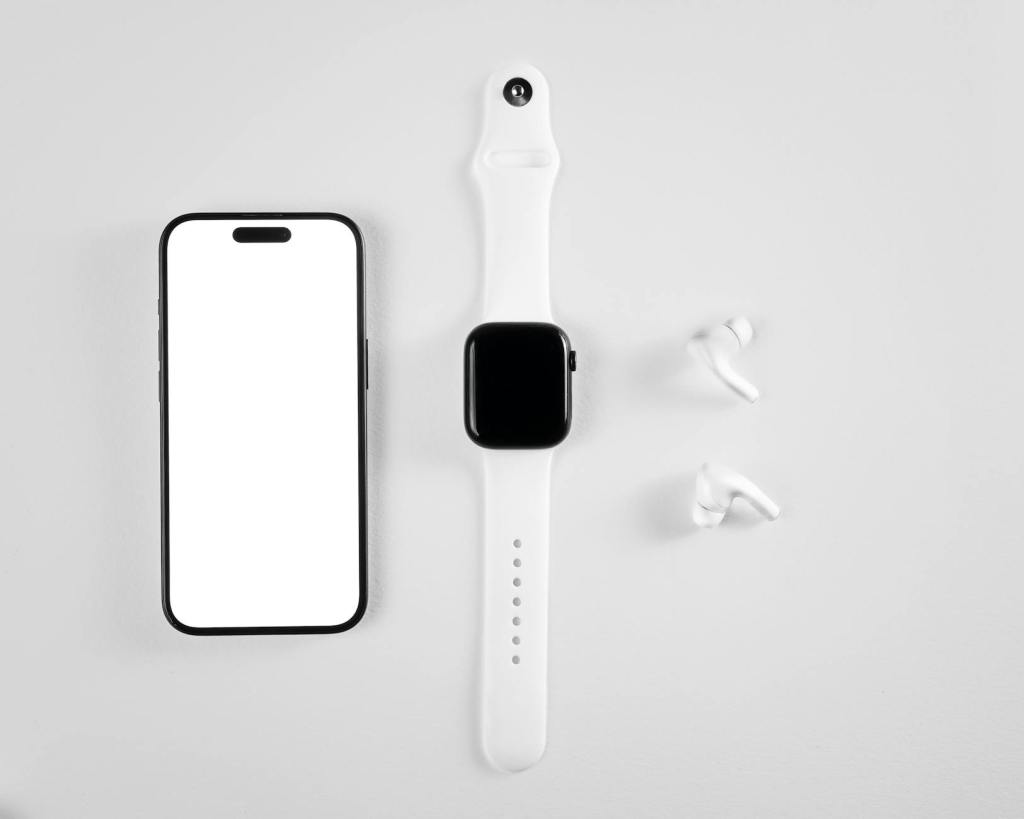
I’ve been obsessed with my Apple Watch for a while now. It all started when I decided to take my fitness journey seriously. No gym membership, just small steps each day, tracked religiously by my watch.
At first, I didn’t think much of it. The watch was a gift, and I figured, “Cool, it tells time.” But now? This thing runs my life.
I’ve tricked it out with a sleek new band, a screen protector, and a custom chronograph face. It’s my weather checker, text message screener, and personal trainer all rolled into one. The best part? The challenges.
- New Year’s challenge? Crushed it.
- Heart Month challenge? Destroyed.
- March’s “Close your rings 20 times” challenge? Done by day 21.
I didn’t realize how much I’d actually listen to feedback from a tiny device originally meant to just tell time. Now, it’s tracking exercise, gait mobility, heart rate variability (HRV), ECGs for AFib, and more. FYI: That last one? FDA-approved. This is no longer just about steps—it’s about real health insights.
Upcoming Apple Health Updates
Apple’s about to roll out a huge update, and it’s packed with all the fun science-y terms that make fitness nerds drool: VO2 max, HRV, and more.
- VO2 Max (Maximum Oxygen Uptake): Think of it as your engine’s horsepower—the higher it is, the better your endurance. While smartwatches estimate it, lab tests with oxygen masks give the most accurate results.
- Why It Matters: Higher VO2 max = better stamina, heart health, and possibly a longer life.
- HRV (Heart Rate Variability): Measures the variation in time between heartbeats. A high HRV is linked to better fitness and stress recovery. A low HRV? Could signal stress, overtraining, or heart issues.
- Why It Matters: Top athletes track HRV to optimize performance. Now, you can too (without a trip to the cardiologist).
But that’s just the beginning. Apple’s Project Mulberry is rumored to bring:
- AI-driven health insights and coaching
- Expanded food tracking
- Workout form correction via camera (because your squat form probably needs help)
- A new Health+ service with doctor-led educational videos
Oh, and Apple is reportedly hiring doctors to train its AI. There’s even talk of a celebrity doctor being the face of this new health push. (Paging Dr. Peter Attia?)
The Bigger Picture: The Future of Wearables
People are more obsessed with health and longevity than ever before, and tech companies are listening. The old way—seeing your doctor once a year for a 15-minute appointment? Not cutting it.
- You get a CBC, cholesterol check, BP reading, and weight measurement once a year.
- With wearables, you get health data daily.
- 4 data sets a year (quarterly monitoring) > 1 set a year. That’s just math.
And it’s not stopping with watches. Wearables are coming for your clothes.
- Smart pajamas to track sleep patterns.
- T-shirts that monitor breathing and detect sleep apnea.
- Continuous glucose monitors (CGMs) for real-time blood sugar tracking.
Speaking of CGMs, non-diabetics are now hacking them for personal health tracking. Why? Because watching your sugar spikes after eating that healthy smoothie is a wake-up call. (Spoiler: It might be a sugar bomb.)
📌 ICYMI: The future of biomonitoring is wild.
- Implantable CGMs – Lasts weeks, no need for finger pricks.
- Glucose + Insulin Monitors – Real-time insulin tracking (still in labs but promising).
- Multi-Biomarker Patches – Measures glucose, caffeine, lactate, alcohol, BP, HR in one wearable.
- Non-Invasive Glucose Tracking – Coming soon to smartwatches (no needles!).
- Ketone Monitors – Track fat-burning and ketosis levels in real time.
(Source: Levels Health)
The Takeaway: Wearables Are The Future
Medicine is changing. AI is creeping into every home, and we’re on the verge of seeing doctors less and monitoring our health more.
Want to be healthier? Get a device that helps.
Not to be posh, snobby, or annoying, but I’m not trying to live to 120 or 200. I just want to feel good, be mobile, and avoid chronic diseases. No interest in diabetes, amputations, or spending my days binge-watching TV because I can’t move. If I make it to 80, I’d rather go out skydiving than in a hospital bed.
So plug in, tune in, and track it. Because the only way to make real progress on anything? Measure it.
In the meantime, happy cardio-maximizing, HRV-reaching, and VO2-maxing!
What are you doing with the time you have?
If you’ve got questions, want an overview, or need advice on wearable tech, email me. I’m happy to help.
 liproti